

When power is shared, but responsibility disappears
When the Presidential Transitional Council (CPT) was installed in April 2024, weary Haitians saw it as a light at the end of a long, dark tunnel.
This body composed of seven voting members and two observers was meant to restore stability, rebuild public trust, and organize free elections before February 7, 2026.
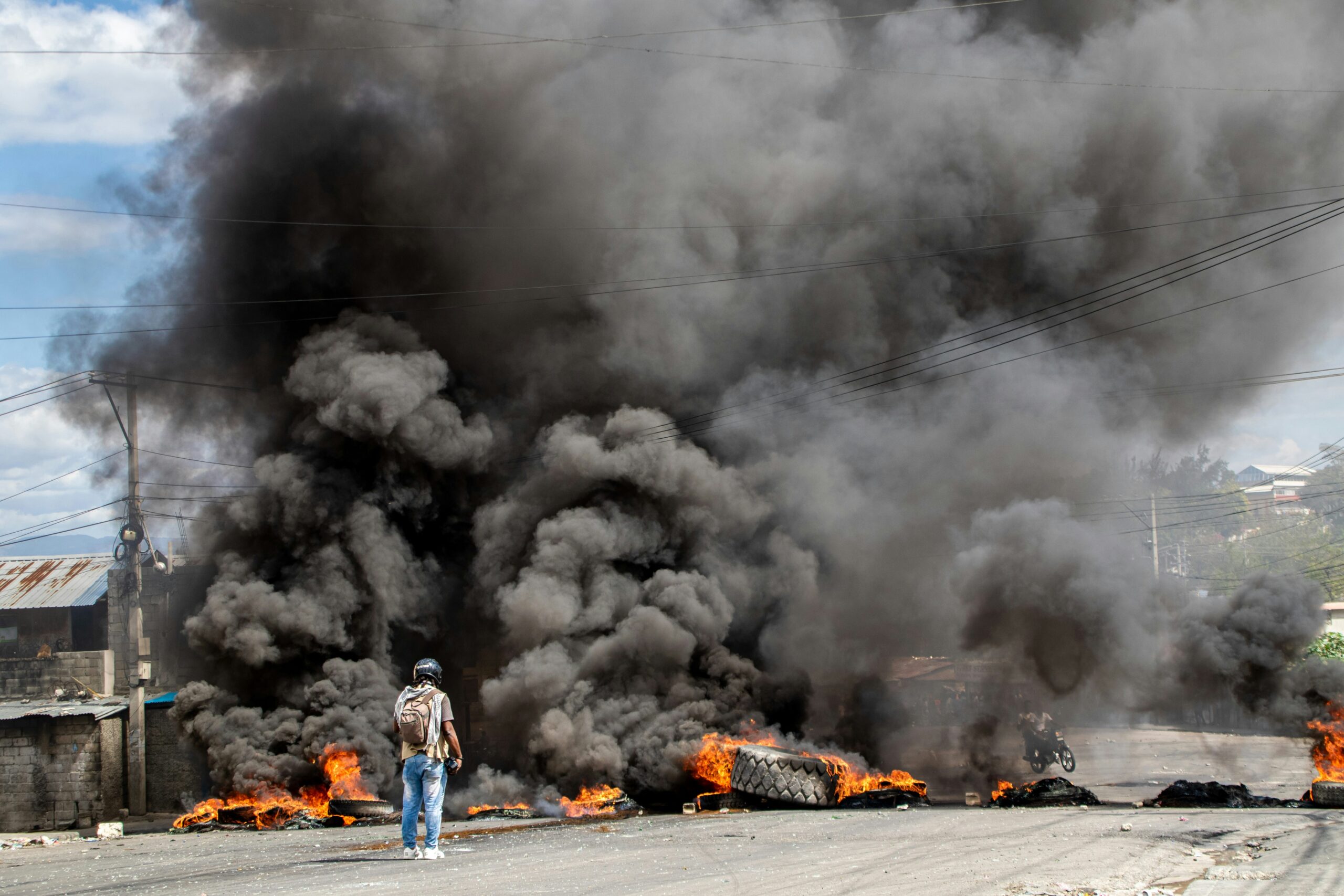
Eighteen months later, the outcome is devastating; the state has weakened even further, armed gangs now control over 80% of the capital. The economy is paralyzed, and despair has replaced hope.
What was meant to be a government of national salvation has become a symbol of political paralysis and moral failure.
Power shared among parties, but a nation paralyzed
The transition was supposed to be a break from the past.
Instead, it created a fragile political arrangement where rival parties within the CPT cancel each other out.
Every decision became a negotiation, every appointment a political battle.
This “collective leadership” has not brought unity it has produced confusion, mistrust, and inaction.
No one is truly accountable; urgent issues are delayed, and party interests always outweigh the people’s needs.
The “Indissoluble Majority Bloc”: the institutional rot
In this climate of uncertainty, the so-called Indissoluble Majority Bloc (BMI) emerged in late April 2024.
Four of the seven voting members — drawn from the Collectif du 30 Janvier, RED/EDE, Pitit Desalin, and the December 21 Accord — formed a closed alliance to control decision-making inside the CPT.
Their goal was simple: to appoint their own Prime Minister, dictate state policy, and dominate the council.
The result was predictable , the CPT turned into a political battlefield, divided between a majority and a marginalized minority.
The three remaining members publicly denounced this maneuver, saying it turned what was meant to be an inclusive transition into an oligarchy in disguise.
The promised consensus collapsed into deadlock, secrecy, and factionalism, further eroding public trust.
Alliances discredited by silence and complicity
While gangs terrorized the population, the CPT drowned in internal quarrels.
No coherent security plan was ever implemented, even as the statistics told a horrifying story:
- More than 4,800 people killed between October 2024 and June 2025.
- Around 1.4 million people internally displaced by armed violence.
- Over 85% of Port-au-Prince under gang control.
Yet, no political accountability has been assumed.
The CPT, dominated by the Majority Bloc, watches, debates, and postpones, but never acts.
It’s silence in the face of massacres and misery has created the perception of passive complicity in the nation’s collapse.
A nation held hostage
Today, Haiti is not only a victim of gang rule, but also a hostage of its own transition.
The political factions that make up the CPT have grown comfortable in the crisis:
they govern without elections, negotiate behind closed doors, and prolong the temporary as if it were permanent.
The results are devastating:
- No progress toward elections.
- No economic recovery.
- No justice for victims.
- No institutional reform.
Haiti lives under an organized paralysis, while its people sink deeper into fear, hunger, and hopelessness.
A government disqualified from organizing credible elections
The CPT was tasked with preparing national elections in November 2025.
But how can an institution oversee free and fair elections when:
- Its members belong to political parties that will compete in those very elections.
- It cannot even guarantee the safety of voters or polling stations.
- It is split into rival blocs that treat every decision as a power play.
- It has failed to deliver justice for thousands of victims of gang atrocities.
The CPT is politically and morally disqualified.
The Haitian people cannot entrust their future to a council that has failed to protect their present.
The way forward: breaking the deadlock
- Transfer electoral management to an independent technical body, made up of non-partisan experts and civil-society representatives, with limited international logistical and security support.
- Publish a national security roadmap, disarm and neutralize the gangs, showing which territories are being secured and when.
- Create special judicial chambers to investigate gang-related massacres and political complicity.
- Prohibit current CPT members from overseeing or supervising the upcoming elections.
- Ensure full transparency, every meeting, vote, and decision of the transition must be publicly documented.
Transition or betrayal?
This transition was meant to bring hope.
Instead, it has brought disappointment, chaos, and disillusionment.
The Haitian people do not need another “power-sharing” arrangement.
They need results, justice, and security.
As long as the CPT, weakened by its internal alliances and silent complicity – remains unchanged, Haiti will remain a hostage to political inertia.